
Course
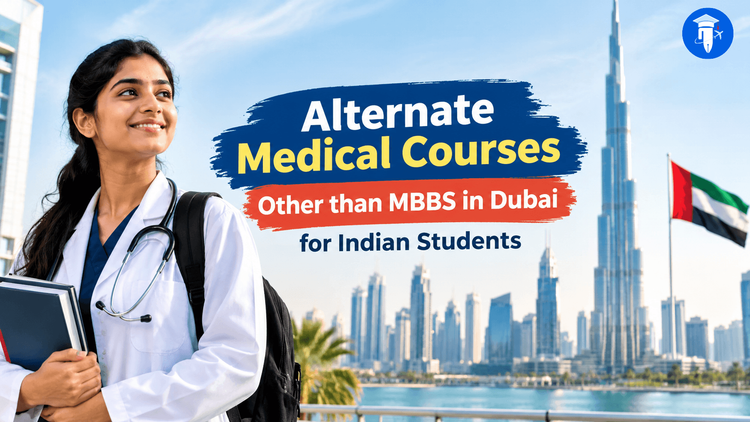
Alternate Medical Courses Other than MBBS in Dubai for Indian Students
Overview:
For Indian students, the idea of studying medicine and becoming a doctor in India automatically means pursuing MBBS/NEET. However, MBBS is just one way of making a career in healthcare.
Healthcare professionals from the fields of nursing, pharmacy, rehabilitation science, medical imaging technology, laboratory sciences, anesthesia, audiology, as well as several others, are required in the healthcare sector.
These professionals assist doctors and are very much involved in the diagnosis and treatment process. Dubai is the best country to pursue Medicine for Indian students seeking to study healthcare professions. Thus, for Indian students seeking alternatives to MBBS in Dubai, here are some good alternatives that can be considered.
Why Consider a Medical Course Other Than MBBS in Dubai?
The healthcare industry is much broader than just doctors. For instance, nurses give direct patient treatment, pharmacists deal with medicines, physiotherapists help patients regain movement skills, and medical imaging technicians work with diagnostic imaging equipment.
This more extensive scope of the industry is also seen through Dubai's professional licensing system, where a number of healthcare allied professionals are recognized, such as medical imaging technologists, medical laboratory technologists, optometrists, pharmacists, physiotherapists, audiologists, occupational therapists, among other specializations.
So for an Indian student, choosing any one of these specializations might serve as an alternative path to healthcare, avoiding the typical pathway of MBBS.
One additional benefit would be that most undergraduate programs are based on Class 12 qualifications, English language proficiency, and university entry criteria, not admission to MBBS as the target.
Best Medical Courses Other than MBBS in Dubai
Here are some of the most relevant options for Indian students:
Course | Duration | Example Dubai Institution | Approx. Tuition Fee |
Bachelor of Science in Nursing (BSN) | 4 years | Dubai Medical University | AED 42,000/year |
Bachelor of Pharmacy (BPharm) | 4.5 years | Dubai Medical University | AED 47,250/year |
Bachelor of Biomedical Science | 4 years | Dubai Medical University | AED 42,000/year |
BSc Medical Imaging Sciences | 4 years | Dubai Medical University | AED 42,000/year |
BSc Anesthesia Technology | 4 years | Dubai Medical University | AED 42,000/year |
BSc Audiology & Speech-Language Pathology | 4 years | Dubai Medical University | AED 42,000/year |
BSc Optometry | 4 years | Dubai Medical University | AED 42,000/year |
Bachelor of Science in Physiotherapy | 4 years | American University in the Emirates | AED 63,500/year |
BSc Nursing | 4 years | MBRU | AED 60,000/year |
Note: Fees are indicative published tuition figures and can change with the academic year. University policy, VAT, additional charges, and other expenses. Always verify the fee before submitting an application or contact Mycareerpathshala.
1. Bachelor of Science in Nursing in Dubai (BSN):
Nursing is the oldest alternative to MBBS for those aspiring to patient-oriented careers in healthcare.
The BSN enables students to pursue their career in fields such as patient care, clinical nursing, community health nursing, emergency care, and other nursing specializations. Also, nursing is particularly mentioned as one of the alternatives to MBBS in international medical education guides.
Nursing in Dubai: Course Details:
Course: Bachelor of Science in Nursing
Duration: 4 years
Institution example: Dubai Medical University (Dubai Medical University's BSN is a four-year, 120-credit programme).
Annual tuition: AED 42,000
Study mode: Full-time, on campus
Eligibility for Indian Students:
For students from the Indian curriculum, Dubai Medical University currently lists a minimum 55% average in Grade 12 Science Stream for its BSN programme.
Students also need to satisfy the English-language requirement. The university lists options including:
80% in secondary-school English, or
IELTS Academic 5.0, or
TOEFL iBT 61.
An English placement test may also be available in certain cases. An equivalency certificate is required for relevant non-UAE school qualifications.
Career Options After Nursing:
After completing the required qualification and licensing process, nursing graduates can explore roles such as:
Registered Nurse
Hospital Nurse
ICU Nurse
Emergency/Critical Care Nurse
Community Health Nurse
School Nurse
Clinical Nurse
2. Bachelor of Pharmacy (B.Pharm):
For those with an interest in medicines, drug development, and pharmaceutical sciences as well as the use of medications by patients, pharmacy may offer a better alternative to MBBS.
Areas covered by pharmacy include pharmacology, pharmaceutics, medicinal chemistry, clinical pharmacy, and pharmaceutical practice. The global educational sources recognize BPharm and PharmD as the most important healthcare alternatives to MBBS.
Pharmacy in Dubai: Course Details
Course: Bachelor of Pharmacy
Duration: 4.5 years
Institution example: Dubai Medical University
Annual tuition: AED 47,250 including 5% VAT
Mode: Full-time, on campus
The programme consists of 160 credit hours and includes practical pharmacy experience in community and hospital settings.
Eligibility for Indian Students:
For the Indian curriculum, Dubai Medical University currently states a minimum 60% equivalent in Grade 12 Science Stream for BPharm.
Applicants also need to meet subject and English requirements. The university lists mathematics and two science subjects among the academic requirements, along with English proficiency. Depending on the academic profile, placement or remedial requirements may apply.
Applicants can also be required to attend an interview as part of the admission process.
Career Options After B.Pharm:
Graduates can explore careers in:
Community pharmacies
Hospital pharmacies
Pharmaceutical companies
Clinical pharmacy
Drug research
Regulatory affairs
Pharmaceutical manufacturing
Medical and healthcare organisations
3. Bachelor of Biomedical Science:
Bachelor of Biomedical Science is suitable for those students who prefer laboratory investigations, diagnosis, medical research, and biological sciences rather than dealing directly with patients.
The subject can be based on topics like molecular diagnostics, microbiology, clinical immunology, histopathology, genetics, and laboratory science.
The Bachelor of Biomedical Science program was launched at Dubai Medical University in 2025.
Course Details:
Course: Bachelor of Biomedical Science
Duration: 4 years
Institution: Dubai Medical University
Annual tuition: AED 42,000 including VAT
The programme includes laboratory-based learning and areas such as molecular diagnostics, medical microbiology, clinical chemistry, and histopathology.
Eligibility for Bachelor of Biomedical Science:
For Indian CBSE, ICSE or State Board students, DMU currently lists a minimum of 60% average in Grade 12.
Students may also need to complete a university placement examination covering subjects such as Biology, Chemistry, Physics and Mathematics, along with an interview.
English requirements can include IELTS 5.5 or TOEFL iBT 71, although the university provides other routes depending on the applicant's previous schooling.
Career Opportunities:
Depending on further study, experience and licensing requirements, biomedical science graduates can work towards careers in:
Medical laboratories
Diagnostic laboratories
Research
Biotechnology
Pharmaceutical companies
Clinical research
Molecular diagnostics
Biomedical research
This course is particularly suitable for students who enjoy biology, laboratory work and scientific research.
4. Bachelor of Science in Medical Imaging Sciences:
Medical imaging is another important healthcare field that does not require students to become MBBS doctors.
Medical imaging professionals work with technologies used to create diagnostic images and support doctors in identifying and managing medical conditions.
Course Details:
Course: Bachelor of Science in Medical Imaging Sciences
Duration: 4 years
Institution: Dubai Medical University
Annual tuition: AED 42,000 including VAT
The programme consists of 123 credit hours and is designed to prepare students for professional roles in medical imaging.
What Do Medical Imaging Professionals Do?
Depending on their professional role and licensing, they may work with imaging procedures and technologies used in healthcare settings.
Possible career environments include:
Hospitals
Diagnostic imaging centres
Clinics
Medical centres
Healthcare organisations
Medical imaging is also recognised within Dubai's allied healthcare licensing framework.
Who Should Choose This Course?
This course may suit students who have an interest in:
Physics
Medical technology
Human anatomy
Diagnostic healthcare
Operating medical equipment
5. Bachelor of Science in Anesthesia Technology:
Anesthesia technology is a specialised healthcare field connected with surgical and perioperative care.
Anesthesia technologists work as part of healthcare teams supporting anesthesia delivery, patient monitoring, and operating-room procedures.
Course Details:
Course: BSc Anesthesia Technology
Duration: 4 years
Institution: Dubai Medical University
Annual tuition: AED 42,000 including VAT
The programme combines biomedical sciences with specialised training in anesthesia systems, patient monitoring and clinical practice.
Career Scope:
Graduates may pursue opportunities in healthcare settings such as:
Hospitals
Surgical centres
Operating theatres
Critical-care environments
Healthcare facilities
This is a specialised option for students who are interested in surgery and clinical technology but do not want to pursue MBBS.
6. Bachelor of Science in Audiology and Speech-Language Pathology:
Not every healthcare career involves medicines, surgery or emergency care.
Audiology and Speech-Language Pathology focuses on communication, hearing, speech, language and swallowing disorders.
Course Details:
Course: BSc Audiology and Speech-Language Pathology
Duration: 4 years
Institution: Dubai Medical University
Annual tuition: AED 42,000 including VAT
The programme is designed to prepare students to assess and support people with speech, language, hearing and swallowing disorders across different age groups.
Career Areas:
Graduates may work in settings such as:
Hospitals
Rehabilitation centres
Speech and hearing clinics
Schools
Specialised healthcare centres
This course can be particularly suitable for students who enjoy communication, psychology, rehabilitation and patient interaction.
7. Bachelor of Science in Optometry:
The other healthcare profession that deals with the eye and vision is optometry.
A degree in optometry may allow students to evaluate vision and offer eye-care services within the scope allowed by the respective licensing agency.
Course Details:
Course: BSc Optometry
Duration: 4 years
Institution: Dubai Medical University
Annual tuition: AED 42,000 including VAT
Career Options:
Depending on qualification and licensing, graduates can explore opportunities in:
Optical centres
Eye-care clinics
Hospitals
Vision-care organisations
Community eye-care settings
Optometry is a useful option for students who want a healthcare career with a specific focus on vision rather than general medicine.
8. Bachelor of Science in Physiotherapy:
One of the most common alternatives to the MBBS course for those who wish to have direct patient contact but do not want to go into medicine is physiotherapy.
Physiotherapists aid patients in regaining movement, dealing with physical issues, and gaining functional ability.
Physiotherapy and nursing, among other healthcare courses, apart from the MBBS, have been highlighted by ALLEN Overseas, whereas Dubai is specifically pointed out by Career Planner for physiotherapy and nursing.
Physiotherapy in Dubai: Course Details:
Course: Bachelor of Science in Physiotherapy
Duration: 4 years
Institution example: American University in the Emirates (AUE)
Annual tuition: AED 63,500 including VAT
AUE's programme includes training in musculoskeletal, neurological and cardiopulmonary rehabilitation and practical rehabilitation skills.
Eligibility:
AUE currently lists:
High school diploma or equivalent
At least 70% in Physics, Chemistry and Biology
IELTS 5.0 or equivalent
Placement tests in English, Mathematics and Science
An admission interview may also be required
The university is licensed by the UAE Ministry of Education/competent higher-education authority.
Career Options:
Physiotherapy graduates can explore opportunities in:
Hospitals
Rehabilitation centres
Sports clinics
Physiotherapy clinics
Fitness and wellness centres
Sports organisations
Students interested in sports, rehabilitation, exercise and human movement may find physiotherapy particularly suitable.
9. BSc Nursing at Mohammed Bin Rashid University (MBRU):
Another Dubai option for nursing is the Bachelor of Science in Nursing at Mohammed Bin Rashid University.
Course Details:
Course: Bachelor of Science in Nursing
Duration: 4 years
Total credits: 120
Annual tuition: AED 60,000
Approximate total tuition: AED 240,000
Are These Medical Courses Available Without NEET in Dubai?
This is one of the most crucial concerns of students regarding admission to MBBS in Dubai. The whole process is completely different from that of other allied health care and healthcare programmes. You should not think that an alternative healthcare programme is as good as MBBS just because it is offered at a top medical university in Dubai.
Concerning the healthcare degrees mentioned in this article, Dubai universities publish their own admission requirements according to Class 12 marks, subjects, English language skills, placement tests, and interviews.
Thus, students who would like to study nursing, pharmacy, physiotherapy, biomedical science, imaging, and other similar programmes should find out about the current admission criteria of the particular university and not think that MBBS/NEET admission criteria apply to all the healthcare degrees. Know the whole procedure by contacting Mycareerpathshala.
Reach us through:
WhatsApp Community: https://whatsapp.com/channel/0029VbBfvQKEawdp13IOCW3i
Instagram: https://www.instagram.com/mycareerpathshala_official
Twitter: https://x.com/mycp_official
Documents Required for Indian Students:
The exact document list can vary by university and curriculum. Before starting the application process, students should generally keep the following documents ready:
Passport
Recent passport-size photographs
Class 10 certificate and marksheet
Class 12 certificate and marksheet
School leaving/transfer certificate, if applicable
English proficiency test score, if required
Attested academic documents
UAE equivalency certificate, where required
Medical/health documents, where required
University application form
Application fee receipt
Other documents requested by the university
Admission Process for Medical Courses in Dubai
The admission process is generally straightforward, but students should start early because document verification and equivalency can take time.
Step 1: Choose Your Course
First, decide what type of healthcare career you want.
For example:
Want direct patient care? → Nursing
Interested in medicines? → Pharmacy
Interested in rehabilitation? → Physiotherapy
Like laboratory work and research? → Biomedical Science
Interested in medical technology? → Medical Imaging
Interested in surgery and operating rooms? → Anesthesia Technology
Interested in hearing and communication? → Audiology & Speech-Language Pathology
Interested in eye care? → Optometry
Step 2: Shortlist Universities
Compare universities based on:
Accreditation
Course curriculum
Tuition fees
Clinical training
Admission requirements
Location
Accommodation
Scholarships
Career and licensing pathways
Do not select a university only because it has a lower fee.
Step 3: Check Eligibility
Check your Class 12 marks, PCB subjects and English-language requirements against the exact programme.
Step 4: Prepare and Attest Documents
Indian students may need to have their educational documents properly attested and obtain UAE equivalency where applicable.
Step 5: Apply Online
Submit the university application with the required documents and pay the application fee.
For example, DMU currently lists an application fee of AED 1,050 including 5% VAT for its undergraduate admissions.
Step 6: Entrance Test or Interview
Depending on the programme, you may need to take:
Placement test
Science test
English test
Mathematics test
University interview
Not every programme requires all of these.
Step 7: Receive the Admission Decision
If selected, the university will issue an admission or offer letter.
Step 8: Pay the Required Fees
Students then need to complete the required fee payment or seat reservation according to the university's policy.
Step 9: Complete Student Visa Formalities
International students must complete the relevant UAE student-residency/visa process through the university or an authorised sponsor arrangement.
Step 10: Begin Your Course
After completing registration and other formalities, students can begin their programme and clinical/laboratory training as applicable.
How Much Does It Cost to Study Medical Courses in Dubai?
Tuition fees vary significantly depending on the university and programme. For the examples covered above, current published fees range from around AED 42,000 per year to AED 63,500 per year, with some programmes such as MBRU's BSN costing AED 60,000 annually.
Students should remember that tuition is not the only expense.
Your overall study budget may also include:
Accommodation
Food
Student visa/residency expenses
Health insurance
Transportation
Books and equipment
University application charges
Document attestation
UAE equivalency
Personal expenses
For example, DMU separately lists hostel and transportation charges in addition to tuition.
Therefore, Indian students should calculate the total cost of studying and living in Dubai, rather than comparing universities only on annual tuition.
Do You Need a DHA Licence After Studying a Healthcare Course in Dubai?
It depends on the profession and the function that one wants to undertake. Undertaking a healthcare degree is one thing; being legally registered and licensed to practice in a regulated healthcare profession is another.
As per the Dubai Health Authority, the professional registration and licensing of healthcare professionals intending to practice in Dubai involves the following:
Self-Assessment
Registration
Activation of the professional licence
Besides, several allied healthcare professions have been recognized under the Dubai professional qualifications framework. Some of them include:
Pharmacists
Physiotherapists
Medical imaging professionals
Medical laboratory professionals
Optometrists
Audiologists
Occupational therapists
Allied health professionals
Therefore, before choosing a course, Indian students should not only verify if the degree offered by the university is available but also whether the qualification is eligible for the professional licensing pathway they wish to pursue.
Can Indian Students Work in Dubai After Completing These Courses?
A healthcare degree can provide a foundation for a career in Dubai, but graduation itself does not automatically guarantee a job or professional licence.
Students may need to satisfy:
Professional qualification requirements
Licensing requirements
Internship/clinical experience requirements
Examination requirements, where applicable
Document verification
Employer requirements
The exact pathway depends on the profession.
For example, a nursing graduate and a physiotherapy graduate will not necessarily follow identical licensing requirements.
This is why students should investigate the professional licensing pathway before paying tuition fees.
Which Medical Course Is Best After 12th for Indian Students in Dubai?
There is no single best course for everyone.
The right choice depends on your interests and career goals.
If you like... | Consider |
Patient care and working in hospitals | BSc Nursing |
Medicines and pharmaceutical science | BPharm |
Biology, laboratory work and research | Biomedical Science |
Medical technology and diagnostic imaging | Medical Imaging |
Surgery and operating-room environments | Anesthesia Technology |
Speech, hearing and communication | Audiology & Speech-Language Pathology |
Eye and vision care | Optometry |
Exercise, rehabilitation and physical recovery | Physiotherapy |
Conclusion
MBBS in Dubai is not the only option to get into the field of healthcare. There are various alternative medical courses for Indian students in Dubai aside from MBBS, like nursing, pharmacy, physiotherapy, biomedical science, medical imaging, anesthesia technology, audiology and speech-language pathology, and optometry.
The main advantage of the aforementioned courses is that the candidates will be able to specialize in one particular field of healthcare instead of taking the long and competitive path of becoming an MBBS graduate.
Frequently Asked Questions:
Q. Which are the best medical courses other than MBBS in Dubai for Indian students?
Popular options include BSc Nursing, BPharm, Physiotherapy, Biomedical Science, Medical Imaging, Anesthesia Technology, Audiology and Speech-Language Pathology, and Optometry.
Q. Can I study medical courses in Dubai after 12th without doing MBBS?
Yes. Several healthcare and allied health undergraduate programmes are available after Class 12. Admission requirements depend on the specific programme and university.
Q. Is NEET required for nursing or physiotherapy in Dubai?
NEET is not generally the university admission criterion for the Dubai undergraduate nursing and physiotherapy programmes discussed here. Universities instead publish their own academic, English-language, placement and interview requirements. Students should verify the latest requirements before applying.
Q. What is the cheapest medical course in Dubai?
There is no single cheapest course because fees vary by university. Among the programmes covered in this guide, some Dubai Medical University health-science programmes currently list tuition of AED 42,000 per year, while other programmes have higher fees.
Q. Can I become a doctor by studying these courses?
No. These programmes lead to different healthcare professions. They do not award an MBBS qualification.
Q. Which is better: MBBS or an alternative medical course?
It depends on your career goal. If your goal is specifically to become a physician, you need to pursue the appropriate medical degree. If you are interested in nursing, medicines, rehabilitation, diagnostics, laboratory science or another healthcare field, an alternative programme may be more suitable.
Q. Is Dubai good for studying healthcare courses?
Dubai offers a range of healthcare and allied health programmes and has a regulated professional healthcare system. However, students should compare accreditation, tuition, clinical training and post-graduation licensing requirements before choosing a programme.
Q. How much does it cost to study medical courses in Dubai?
The tuition fee depends on the programme and university. Current examples discussed in this guide range from approximately AED 42,000 to AED 63,500 per year, although fees can change and additional expenses apply.
Q. Can Indian students work in Dubai after completing a healthcare degree?
Potentially, but completing a degree does not automatically provide a professional licence or guarantee employment. Graduates must meet the relevant professional licensing and employer requirements.
Q. What should I check before applying?
Check programme accreditation, Class 12 eligibility, English requirements, total tuition and living costs, document equivalency, clinical training and the professional licensing pathway after graduation.